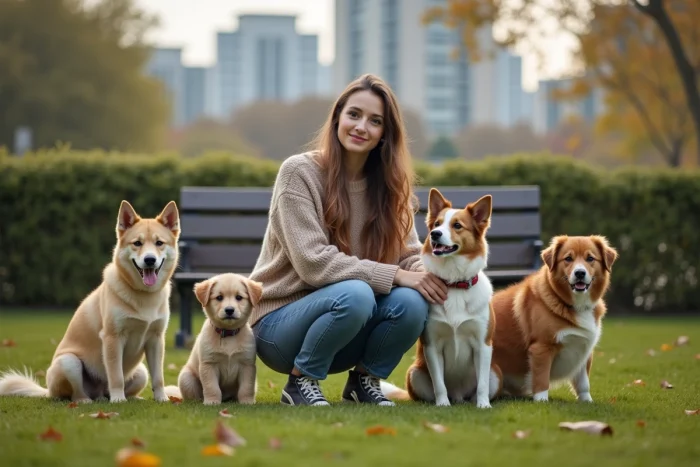
A working dog may not necessarily obey a sedentary owner, while an ornamental dog can develop behavioral issues in an overly stimulating environment. Some hunting dogs lose their instinct when they live exclusively in an apartment, while breeds known for their independence can become very attached to their home.
The diversity of breeds leads to specific needs in terms of education, activity, and care. Adapting these criteria to one’s daily life is the key to avoiding disappointments and ensuring the well-being of both the animal and the owner.
Understanding What Differentiates Dog Breeds
Behind the word “dog,” there are entire worlds. The International Canine Federation (FCI) classifies breeds into ten families, each shaped by an initial vocation: herding, hunting, guarding, companionship… This structure reveals how the border collie is bursting with energy, why the bichon frisé remains the best ally for allergy sufferers, or how the French bulldog imposes its proverbial calm.
Size, coat texture, silhouette, and approach to the world—each trait has been sculpted over time to serve a purpose. Take the border collie: it needs to expend its intelligence as well as its energy, often requiring up to ten active hours a day. This is in stark contrast to the pug, an expert in cuddles, who prefers nothing more than to stay close to its humans. Genetics plays a role: a dog’s behavior is inherited to the extent of 40%, according to most studies, while the rest comes from education and context. The secret? Daily adaptation of its environment to unlock each animal’s potential.
To help navigate this, the classification of breeds is displayed in a few major families with well-identified needs:
- Working dogs (German shepherd, boxer): these athletes require regular training and intense mental stimulation.
- Hunting dogs (beagle, setter): endowed with a keen sense of smell, they crave long walks and exploration.
- Companion dogs (shih tzu, bichon): they primarily require companionship, as solitude weighs heavily on them.
Health is not a detail: the bulldog and pug, for example, struggle with heat or sustained effort due to their fragile breathing; Labradors and golden retrievers, on the other hand, sometimes have to deal with hip fragility. As for coat maintenance, it ranges from poodles to Newfoundlands, not neglecting hypoallergenic breeds. To confront your desires with reality, their needs and profiles, see the dogs on Les Chiens ne font pas des Chats offers a straightforward and candid comparison.
Which Dog is Right for You? Essential Questions to Ask
Choosing a dog breed is not just about falling for a cute face: it’s about balancing your lifestyle with that of the animal. For instance, a border collie would quickly wither in a too-sedentary daily routine, while a shih tzu adapts perfectly to apartment living, provided it receives its share of attention.
The environment shapes your future routines: small, calm dogs like the French bulldog or Yorkshire terrier are better suited for city life or small spaces. If you have a garden, you might consider dynamic or large breeds: Australian shepherd, Newfoundland… The city, however, requires dogs that are tolerant of noise and commotion; the Cavalier King Charles quickly finds its place there, while a husky might feel trapped.
Some guidelines can facilitate the choice when you’re torn between several profiles:
- Family with children: patient and gentle dogs like the golden retriever, beagle, Labrador, or Cavalier King Charles allow everyone to feel welcome and secure.
- City life: lean towards the French bulldog, shih tzu, or bichon, accustomed to close quarters and indoor living.
- Active or rural lifestyles: border collie, Australian shepherd, or setter, always ready to join you in action and wide-open spaces.
Maintenance can also play a role: schnauzers, poodles, or bichons are hypoallergenic and will simplify life for sensitive individuals, while a Newfoundland requires time and diligence in grooming. Compare size, activity level, tolerance for solitude, and even grooming frequency with your own constraints; the compromise on paper becomes a reality in daily life.
Practical Tips and Tools for Finding the Ideal Companion
Getting a dog means committing to a story that lasts: a decade, often more. Before diving in, talking with a veterinarian or a dog trainer ensures you start on solid ground: personalized advice, specific points of vigilance for each breed, and an objective assessment of compatibility. This external perspective proves more useful than one might imagine, especially when one has never shared their life with a dog.
The law leaves little to chance. Since 2022, signing a commitment certificate is required for any adoption: it commits you to understanding (and acknowledging) the obligations and needs of the animal. Starting in 2024, the pet shop option will disappear for dog sales in France, further promoting responsible channels, shelters, or professional breeders.
Considering a shelter remains a path not to be overlooked: you can find dogs of all ages, backgrounds, and many personalities. Observing their reactions and discussing in-depth with the caretakers allows for a more intelligent adoption than a mere act of charity. Sometimes, it’s the dog that chooses its human, not the other way around.
Ultimately, choosing a dog is about questioning oneself. This companion shares every flaw, every energy. Together, you chart a new territory. Over time, attachment transforms constraints into daily appointments. Years later, it’s the animal, and the version of you it has revealed, that you remember the longest.