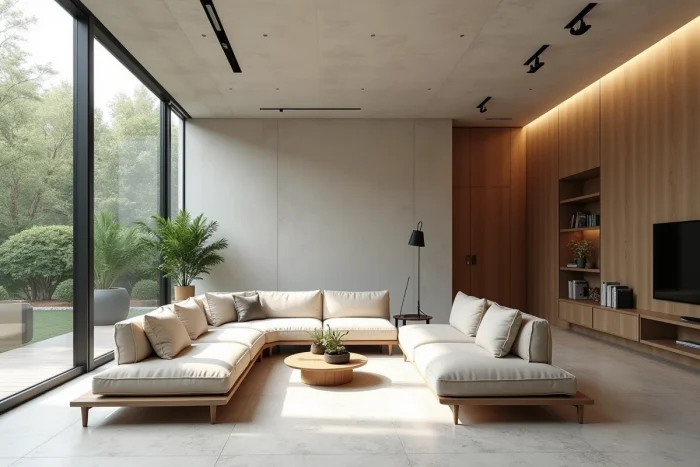
Contemporary architecture is no longer defined by a single style, but by a set of technical responses to specific constraints: energy performance, adaptation to actual uses, restoration of the natural environment. These responses reshape the way interior and exterior spaces are designed, from the choice of materials to the management of light.
Regenerative Architecture: Going Beyond Simple Material Sustainability
Most projects labeled “sustainable” aim to limit their footprint. Regenerative architecture seeks the opposite: a building that improves its environment after delivery. The Living Building Challenge, supported by the International Living Future Institute, documents achievements in Europe and North America that produce more energy than they consume and improve the quality of water and air on site.
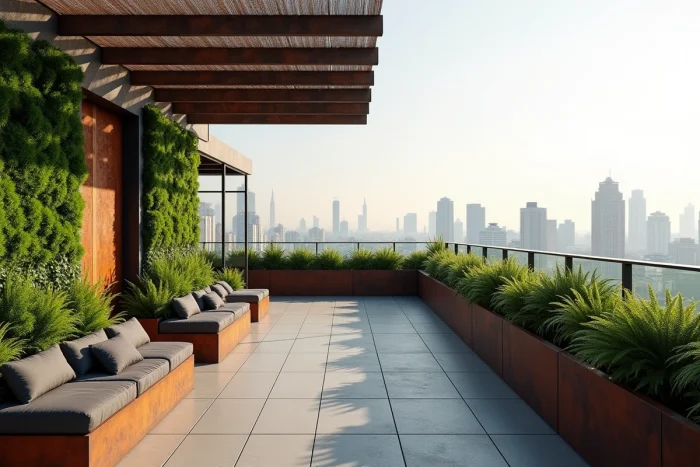
In practical terms, this translates into envelopes capable of filtering atmospheric pollutants, water recovery systems that recharge groundwater, and green roofs designed to restore soils and increase local biodiversity. The project no longer simply aims to “do no harm”: it restores an ecosystem.
This paradigm shift involves a longer design process, often conducted with ecologists from the initial sketch. An architecture firm like the one found at siaarchitecture.fr integrates this multidisciplinary logic so that the building functions as a living organism, not just as a simple habitable volume.
Generative AI and Digital Twins in Architectural Projects
In recent years, generative AI has changed the design phase. Publishers like Autodesk and Bentley Systems document the operational use of algorithms capable of testing hundreds of layout variations in just a few hours. Sunlight, acoustics, traffic flow: each parameter is optimized even before the first physical model.
The logical extension of this approach is the digital twin. A virtual replica of the building, powered by sensors, that allows for real-time adjustments of the space after delivery. If an open space is underutilized on Fridays, the twin detects it and suggests a reconfiguration of the furniture or ventilation.
Post-Occupation: Adapting Space to Actual Uses
Agencies like Zaha Hadid Architects or BIG have communicated on projects where AI is not only used to design a shape. It analyzes post-occupation data to adapt the interior programming to the measured behaviors of occupants. The architect is no longer involved only before construction but throughout the building’s life cycle.
This feedback loop changes the relationship to interior design: a space is no longer fixed upon project completion. It evolves, reconfigures, and refines over time.
Biosourced Materials and 3D Printing: What Changes for Interior Comfort
The choice of materials conditions both the aesthetics, thermal comfort, and carbon footprint of a project. Two trends intersect in contemporary architecture and deserve to be distinguished.
- Low-footprint biosourced materials (solid wood, rammed earth, hemp, mycelium) are gradually replacing reinforced concrete in certain structures. Cross-laminated timber (CLT) allows for the construction of multi-story buildings with a carbon footprint significantly lower than that of traditional concrete.
- 3D printing with concrete or earth, documented by several agencies in recent years, reduces construction waste and allows for organic shapes that are impossible to achieve with traditional formwork. Printed walls offer formal freedom that transforms interior decoration from the shell stage.
- Facades made from algae or mycelium, still experimental, function as bioreactors integrated into the building. They capture CO₂ while producing valuable biomass.
These materials are not mere substitutes. They alter the texture, light, and feel of spaces. A rammed earth wall naturally regulates humidity and offers a different atmosphere than a painted drywall wall. The choice of material becomes a design act in its own right.
Neuro-Architecture: Designing Space Based on the Brain
Neuro-architecture studies the measurable effect of the built environment on the nervous system. Ceiling height, color temperature of lighting, proportions of a room: each parameter influences the stress level, concentration, or sleep quality of occupants.
The Academy of Neuroscience for Architecture (ANFA) works on protocols that allow for testing physiological reactions to different spatial configurations. The goal is to shift from a design based on aesthetic intuition to a design based on neurological data.
Concrete Applications for the Home
In a residential project, this can translate into a slightly wider corridor to reduce the feeling of compression, a higher ceiling in the living room to foster creativity, or circadian lighting that follows the biological rhythm of the inhabitants. The space is no longer just beautiful; it impacts physiological well-being.
This approach is still not widespread among generalist interior architects, but it is gaining ground in custom projects, particularly for workspaces or high-end residences.
Contemporary architecture is now structured around feedback loops: usage data, measured environmental performance, neurological responses of occupants. The building delivered in 2025 is no longer a finished object. It is a living system, calibrated to adapt to those who inhabit it and the land that supports it.