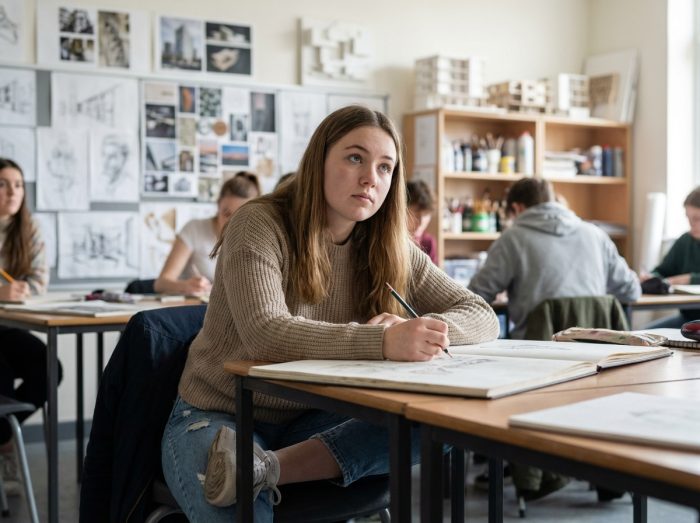
Raw figures, displayed quotas, and behind them, hundreds of profiles trying their luck each year: access to art and design schools is not just a simple formality. Here, the artistic portfolio takes precedence, the formulation of a personal project becomes a key, and the school report is just one element among others. As post-bac pathways multiply, each program imposes its rules, its carefully guarded admission criteria, often far from the eyes of high school students and their families.
Bridges, preparatory classes, and leveling-up programs intertwine, sowing doubt among those seeking their place. Navigating these paths, untangling their specifics, guessing possible outcomes: all of this often poses a real challenge for candidates and their parents, as information remains fragmented in traditional guidance materials.
Understanding post-bac pathways in applied arts: DN MADE, MANAA, design prep
When discussing programs in applied arts after the bac, three major frameworks stand out: DN MADE (national diploma in arts and design), the now-historical MANAA (leveling up in applied arts), and the design preparatory class. Each embodies a different path to shape one’s first steps in higher education, from the curious high school student to the aspiring creative.
The DN MADE has recently reshaped the landscape of artistic training in France. Three years of learning centered around workshops, experimentation, and gradual acquisition of fundamentals: in the third year, students specify their choice of specialization, graphic design, space, object. The MANAA, now absorbed by the reform, long served as a springboard for those lacking an artistic bac. As for the design prep, it remains a sought-after option to refine one’s desires, test different mediums, and strengthen one’s portfolio before the competitive exams of prestigious schools.
To concretely understand why this detour through prep is crucial, explore the reasons for doing a preparatory year in Design. A pivotal year, it is an opportunity to build a portfolio, confront the expectations of the field, but above all, gain the confidence that makes the difference in juries. In a studio or shared workshop, creativity is unleashed, technical skills are reinforced, and critique becomes a driving force. It is this newfound maturity that is sought in Paris, Lyon, or elsewhere by all selective schools.
Here are some concrete benefits gained from a year in preparatory class:
- Adopting a rhythm and methods specific to higher education
- Broadening visual culture while weaving initial professional or friendly connections
- Preparing in real conditions for competitions and interviews while refining personal storytelling
This testing ground prepares for what comes next. The future student finds a space to assert their identity, become aware of their strengths, and measure their areas for growth. For those seriously aiming for an art or design school in France, this step can reshuffle all the cards.
Design preparatory year: refining one’s project, building one’s orientation
The design preparatory year acts as a laboratory: one experiments, allows oneself to take risks, learns to accept mistakes, and above all, to cross thresholds. It is by intersecting disciplines, graphic design, animation, spatial design, visual arts, that one sharpens their own perspective on creation and their future. Here, each experience feeds the questioning of one’s orientation choice while opening up the range of design professions.
Building the foundations of a unique path
Throughout the year, several key moments mark the progression:
- Creating a personal portfolio, a true passport for admissions to artistic programs
- Integrating the methodological requirements of BTS graphic design, license in visual arts, or DN MADE
- Being guided to understand the specific expectations of each post-bac program and refine choices
Thanks to this framework, one experiments, debates, and learns to defend a project in front of an audience. The teachers, often active in the field themselves, share feedback and real-world demands of the profession. The preparatory year is not just about technical skill; it is the true place where a creative identity is forged and where uncertainty is transformed into a confident positioning, ready to face the tight selection of applied arts design schools.
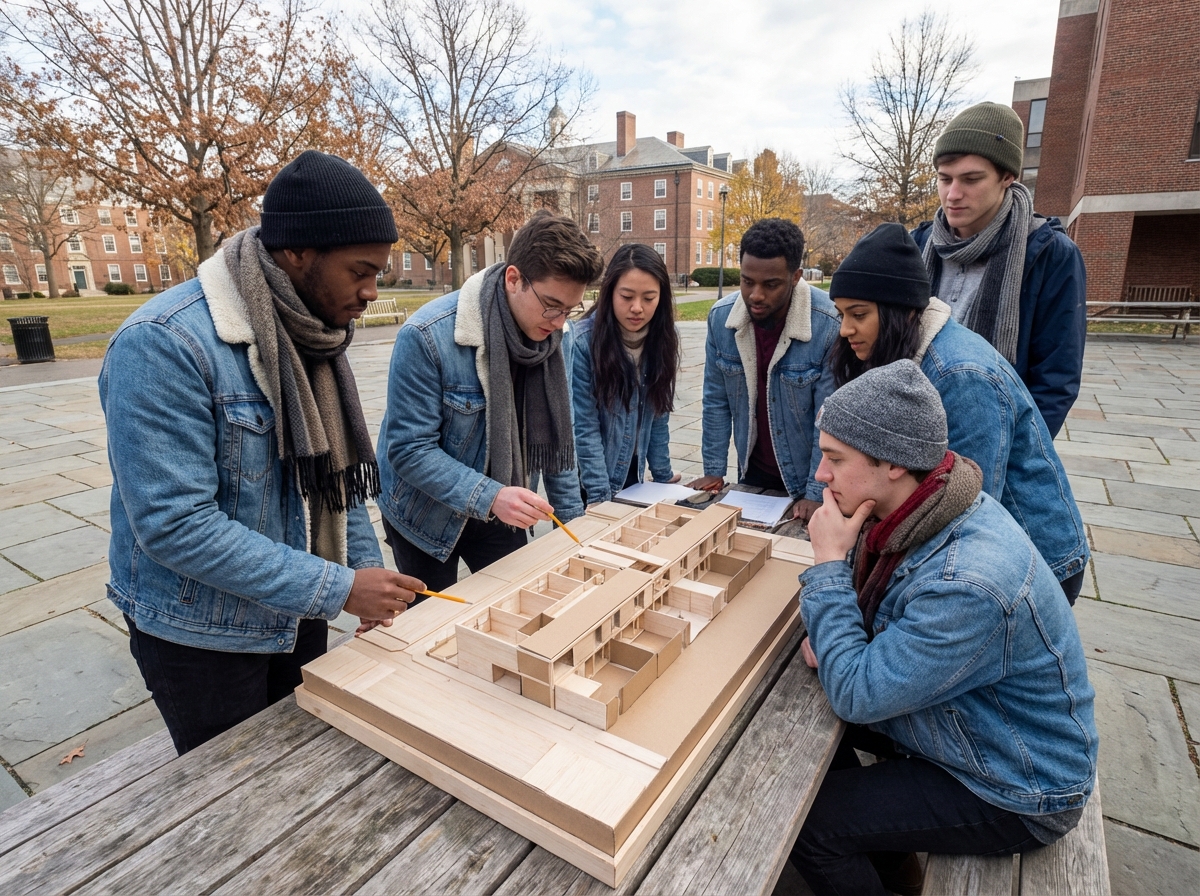
Preparing a convincing portfolio and succeeding in entering a program
A high-energy file or a meticulously crafted portfolio: everything hinges on this presentation. Beyond a simple selection of works, the portfolio showcases the perspective, the journey, the diversity of attempts. Juries expect less a perfect success than a visible trajectory. Showing doubts, hesitations, research, and rebounds often makes the difference. A striking artistic book articulates the approach, rests on clear choices, and reflects the creator’s evolution and ability to reinvent themselves.
Here are some concrete principles for shaping a compelling file:
- Vary experiences: observational drawing, graphic research, volumes, color, and gather about ten to showcase the breadth of work
- Highlight the process: include sketches, questions, material tests, or approaches to narrate the journey of each project
- Ensure clarity and visual harmony: each project should stand out while fitting into a coherent whole
Another reality: individual interviews weigh heavily in the decision. Candidates must be comfortable verbalizing their journey and their appetite for creation, clarifying their interest in design, the arts, and defining an orientation that aligns with the requirements of DN MADE, a preparatory class, or a BTS graphic design. Each institution sets its own preferences: some prioritize experimentation, others precision or the ability to defend a choice, hence the importance of being informed in advance.
It would be futile to neglect financial aspects, tuition fees, the possibility of scholarships or alternation, when preparing an admission file. Considering the continuation of studies right after prep also allows for preparing one’s future with clarity. Ultimately, what matters is to reflect a personal construction, seriousness in the approach, and active curiosity. Some files captivate with their breadth, others with their coherence: all have the power to change a candidate’s trajectory, sometimes where they least imagined it.