Brittany is one of the few French regions to have an official flag not issued by the central government. In Saint-Malo, a municipal law from 1790 prohibits residents from speaking French in public spaces, a regulation that has never been repealed. UNESCO has inscribed the fest-noz on the intangible cultural heritage list, joining Irish dances and flamenco. The Diwan schools welcome nearly 4,000 students each year for total immersion in the Breton language. The region boasts more than 2,900 festivals, making it one of the highest densities of cultural events in Europe.
Brittany, crossroads of stories and legends
In Brittany, history is read in stone, felt in the salty breeze, and sensed on the paths between moorland and ocean. Here, heritage takes on a thousand faces. Romanesque abbeys, granite castles, chapels hidden in the countryside: each building recalls a time when the region shone with its spirituality and power. This blend of architectural heritage and religious heritage creates a backdrop where each village asserts its own identity.
Along the paths, tales and legends persist. Between the bay of Saint-Brieuc and the Crozon peninsula, one encounters the memory of traveling saints, mischievous korrigans, or feared shipwreckers. These stories, carried by oral tradition, nourish the region’s intangible heritage. From one evening gathering to another, from a fest-noz to a neighborly get-together, the transmission occurs naturally. Mont Saint-Michel bears the silhouette of Saint Michael on the horizon, while the ramparts of Saint-Malo still whisper the exploits of privateers.
Museums and heritage houses, whether located in Saint-Brieuc or in small towns, highlight the diversity of Breton culture. Art collections, everyday objects, photographs by Alexandre Lamoureux… Brittany showcases its memory, but also its vibrant creativity. To delve deeper, learn more about Culture Brittany allows one to explore the history, traditions, and practices that enrich this territory.
What makes Breton traditions so lively and unique?
What sets Brittany apart is its ability to keep the heritage alive without ever being confined by it. The Breton language, passed down from generation to generation, continues to resonate in Diwan schools, on radio waves, or in the pages of novels and poems. Pierre Jakez Hélias anchored it in collective memory, revealing its strength and poetry to all. Beyond the language, Breton culture is embodied in music, gastronomy, dance, but especially in the direct connection between speech, gesture, and shared celebration.
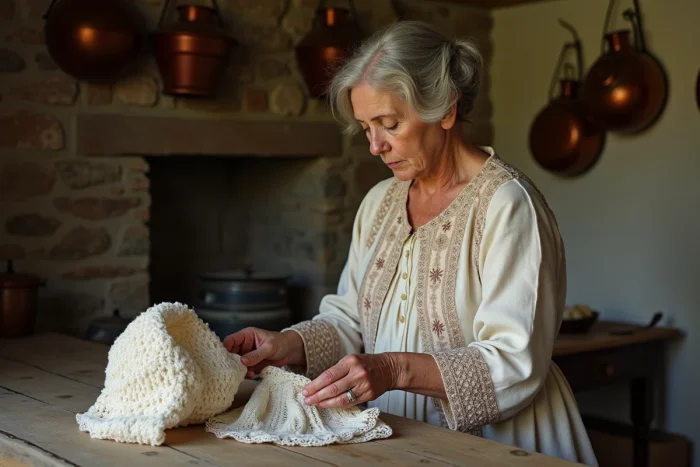
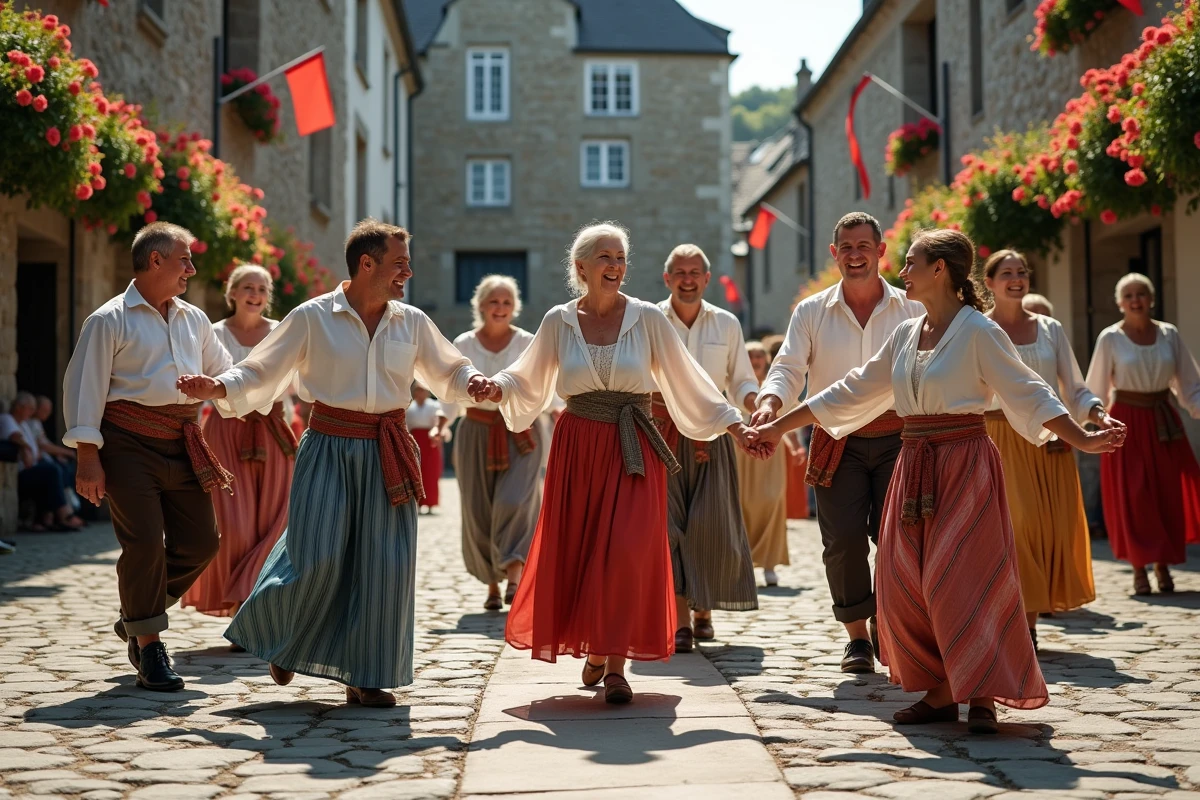
In Rennes, Pont-Aven, or in the coastal villages, intangible heritage manifests at every fest-noz. These evenings bring the community together to share songs, dances, and conviviality. Nothing dusty about folklore: Brittany prefers vitality over nostalgia, constantly renewing its forms. The crafts, ceramicists, weavers, engravers, perpetuate traditional know-how while engaging today with contemporary art. The photographs of Alexandre Lamoureux capture this energy: that of Celtic circles, lively workshops, galleries open to the world.
Here are three pillars that illustrate this dynamic:
- A language that evolves with each generation, never static.
- Collective rites that gather and unite society.
- A heritage balanced between legacy and innovation.
Brittany does not merely transmit: it invents, shapes, and asserts a plural identity every day. Each generation finds its place, balancing respect for roots with the desire to create its own Brittany.
Festivals, arts, and know-how: an immersion in the heart of Breton culture
Breton culture fully reveals itself in its festivals, which punctuate the year and attract enthusiasts and curious visitors from all over Europe. In Lorient, the Interceltic Festival brings together crowds every summer to celebrate Breton music and Celtic cultures. The fest-noz, inscribed by UNESCO, embodies this collective fervor: musicians and dancers pass down gestures and tunes that transcend generations.
In Quimper, the Cornouaille Festival showcases a diversity of artistic expressions. Costumes with intricate embroidery, colorful parades, outdoor concerts: the city comes alive and displays the vitality of popular arts. Further north, the La Gacilly Photo Festival transforms the streets into a true open-air gallery. The exhibited photographs, including those by Alexandre Lamoureux, tell the story of Brittany yesterday and today, connecting memory and contemporary creation.
Craftsmanship and gastronomy
Two areas particularly illustrate this vibrancy:
- Crafts keep precious techniques alive, whether in ceramics, embroidery, or cabinetmaking.
- Breton gastronomy delights with its crêpes and kouign-amann as well as with its starred establishments where local produce is reinvented.
From one festival to another, from an artisan workshop to a gourmet table, Brittany composes a mosaic where each fragment, whether artistic, culinary, or festive, affirms the vitality of a culture in motion. Here, heritage is never a relic, but a force that is shared, invented, and experienced, season after season. Let yourself be surprised by Breton creativity: this is where history continues to be written, with every beat of fest-noz, every batch of galettes, and every gaze cast upon the sea.