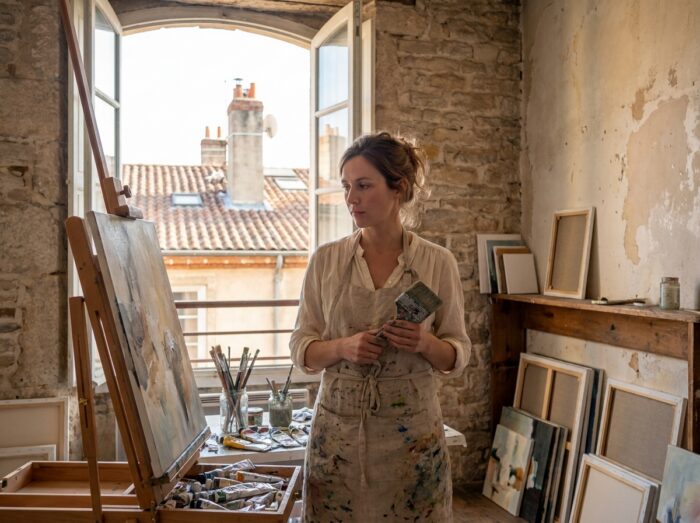
A transition to an artistic career in Lyon requires measuring the gap between the current professional situation and the realities of the local cultural sector. Rather than fantasizing about a radical career change, it is more reliable to compare the available systems, possible legal frameworks, and concrete opportunities before making a decision.
Legal and tax status of an artistic activity in Lyon: what changes depending on the chosen framework
The first concrete obstacle to an artistic career change is not creative; it is administrative. Depending on the context of the search, the distinction between personal creation and mass reproduction can determine whether one falls under the artistic field or a commercial activity. This point modifies the tax regime, social contributions, and access to certain rights.
| Criterion | Artist-author (original creation) | Artisan (mass production) |
|---|---|---|
| Social regime | Social security for artist-authors | General or independent regime |
| Taxation | BNC (non-commercial profits) | BIC (industrial and commercial profits) |
| VAT on sales | Reduced rate on original works | Normal rate except for exceptions |
| Access to artistic residencies | Eligible | Rarely eligible |
This table simplifies a more granular reality, but it highlights a point that many candidates for career change discover too late: the legal framework determines access to cultural systems. A ceramist who sells unique pieces and a ceramist who produces identical series do not fall under the same administrative world, even if they work in the same studio.
Before committing to training or leaving a job, it is essential to clarify this point with a specialized advisor. The Maison Lyon pour l’emploi offers personalized professional guidance that takes into account the individual’s history, identity, and environment to build a realistic project. When questioning the questions to ask before an art school in Lyon, this administrative framing should be at the top of the list.

PMSMP immersion in Lyon: testing an artistic profession without resigning
The PMSMP (Professional Situational Immersion Period) program allows individuals to spend a few days in a structure to observe and practice a profession. The Maison Lyon pour l’emploi presents this immersion as a way to concretely discover a profession before committing.
For an artistic career change, this program is underutilized. Most candidates think of art school or long training. The PMSMP immersion validates an artistic project without leaving one’s job.
The professions that can be tested through this means in Lyon go beyond just artistic practice:
- Cultural mediation in an art center or museum, for those who want to transmit rather than produce
- Scenography or technical management in a theater, which requires both organizational and creative skills
- Cultural production or event coordination, an accessible opportunity for profiles from management or administration
The advantage of this approach is to confront a mental projection with the daily reality of the profession. Working in a shared studio or assisting an artist for a week reveals constraints (rhythm, precariousness, isolation) that no training can simulate.
Artistic residencies and urban transformations: an overlooked Lyonnais opportunity
Lyon has been deploying artistic support residencies in priority neighborhoods affected by urban projects for several decades. These residencies stem from the belief that artistic presence provides a listening space for residents impacted by changes.
This type of opportunity remains little visible in traditional career change paths. The involved artists work at the intersection of creation, mediation, and social connection. They produce works presented to the public, but their mission also includes listening to residents and documenting territorial transformations.
For a professional in transition, these residencies offer a double advantage. On one hand, they provide a paid and structured framework, unlike independent artistic practice, which often starts without income. On the other hand, they value transversal skills (group facilitation, project management, listening ability) that candidates from other sectors already possess.
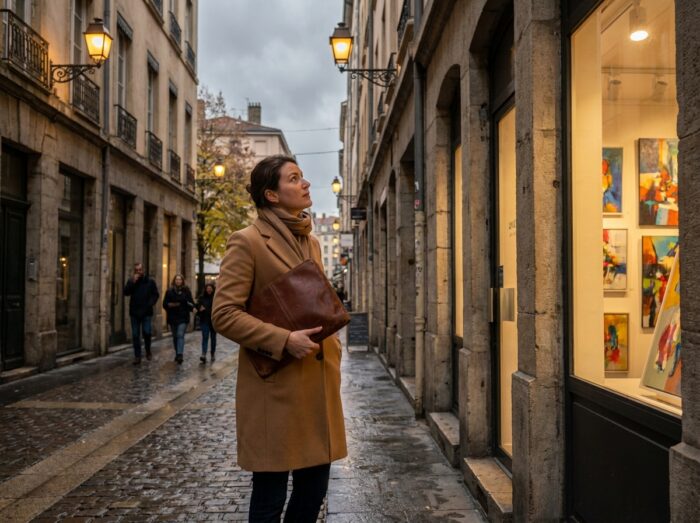
Accessing these residencies without an art degree
Applications for these residencies do not systematically require an art school diploma. A solid artistic portfolio and a coherent approach count more than a DNSEP. Moreover, multi-activity is one of the dominant traits of the integration of fine arts graduates from Lyon, meaning that the market does not reserve its spots solely for academic paths.
Building this portfolio takes time. This is precisely why an artistic career change benefits from being prepared over several months, alongside a salaried activity, rather than rushed after a resignation.
Guidance and support in Lyon: comparing available systems
An artistic career change can go through general orientation systems and not just through art schools. The Maison Lyon pour l’emploi offers support that does not presuppose the destination field. In contrast, schools like ENSBA Lyon train for specific professions (visual artist, designer, scenographer) and require a commitment of several years.
- General support is suitable for individuals who are still hesitating between several cultural or artistic professions
- The art prep course is aimed at those who want to test several disciplines before specializing, with teaching in painting, sculpture, graphic design, or animation
- Short workshops allow for maintaining regular practice without interrupting a professional activity
Each system corresponds to a different level of commitment. Confusing a desire for personal artistic practice with a professional career change project leads to disproportionate choices, such as enrolling in a five-year program when a weekly workshop would suffice.
The most useful data for making a decision remains the available time. A full-time employee with a few hours per week does not have the same options as someone on a mutual termination with twelve months ahead of them. Establishing this parameter before everything else avoids comparing incomparable systems.