
After an intense session, you have probably already felt that fatigue that doesn’t go away despite resting. Often, the problem doesn’t come from the training volume but from what’s on your plate. Sports nutrition directly affects the quality of effort and the speed of recovery, whether you practice running, weightlifting, or a team sport.
Relative Energy Deficiency: The Unrecognized Trap of Sports Nutrition
Eating less to be lighter, faster, drier: this logic appeals to many practitioners. However, it can trigger a range of dysfunctions grouped under the name of RED-S (Relative Energy Deficiency in Sport).
The consensus of the International Olympic Committee published in 2023 in the British Journal of Sports Medicine describes RED-S as a set of hormonal, bone, immune, and psychological disturbances. It affects both women and men, contrary to a persistent misconception.
The problem is not limited to a universal caloric threshold. The duration of the deficit, its intensity, and the individual context matter as much as the number of missing calories. An amateur athlete who does interval training while reducing their portions is exposed to the same risks as a high-level athlete in prolonged restriction.
To deepen the foundations of nutrition tailored to each sports profile, the nutrition page of Sport Academy details the key principles to follow based on your discipline and goals.
Carbohydrates, Proteins, and Fats: Adjusting Proportions to Effort
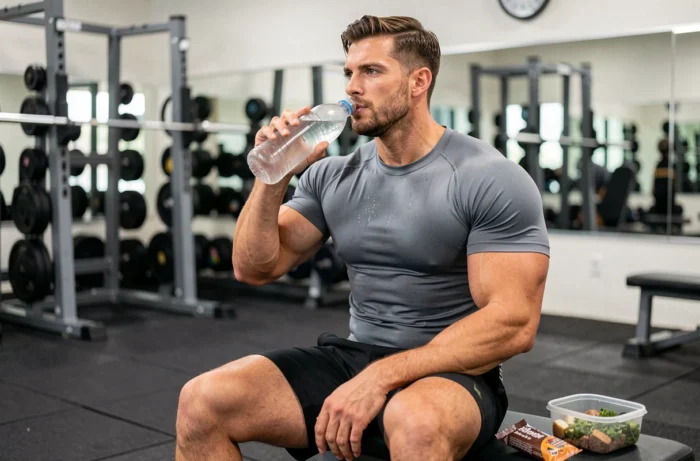
The three macronutrients play different roles depending on the time of day during sports activities. Understanding their function allows for adjusting each meal without falling into the rigidity of a standardized diet.
Carbohydrates and Muscle Energy Reserves
Carbohydrates are the primary fuel for muscles during sustained effort. Rice, pasta, whole grain bread, sweet potatoes: these foods replenish glycogen stores. A meal rich in complex carbohydrates should ideally be consumed two to three hours before effort, to allow time for digestion.
During exercise, beyond an hour of continuous activity, a simple carbohydrate intake (dried fruit, applesauce, sports drink) maintains energy levels and delays fatigue.
Proteins and Muscle Reconstruction
Proteins mainly come into play after effort. They provide the amino acids necessary for repairing the stressed muscle fibers. Poultry, eggs, fish, legumes, dairy products: varying protein sources covers a broader spectrum of amino acids.
Have you ever noticed unusually long muscle soreness after a session? An insufficient protein intake in the hours following effort is often the cause.
Fats: An Underestimated Role
Fats contribute to the absorption of certain vitamins, hormonal production, and joint protection. Olive oil, avocado, nuts, fatty fish provide high-quality fatty acids. Eliminating fats from a sports diet weakens the hormonal system and can worsen relative energy deficiency.
Sports Hydration: Why Drinking Too Much is Also a Problem
The classic guideline to drink “as much as possible” is now being questioned. Recent recommendations favor individualized hydration, calibrated to the duration of effort, ambient temperature, and actual sweating of each person.
Excessive drinking during prolonged effort can dilute sodium concentration in the blood. This imbalance, called hyponatremia, causes nausea, headaches, and even serious complications during marathons or long hikes.
A simple guideline: the color of urine remains the best indicator of hydration level. A pale yellow hue indicates a good balance. Completely clear urine after effort may signal excessive water consumption.
- Before effort: drink regularly in the two hours prior, in small sips, without forcing.
- During effort: adjust frequency to weather conditions and intensity, aiming for a few sips every fifteen to twenty minutes.
- After effort: compensate for losses with slightly mineralized water, accompanied by a source of sodium if the session was long and sweating was abundant.

Dietary Supplements for Athletes: What to Check Before Buying
The market for dietary supplements aimed at athletes is vast, but their regulatory framework remains limited. In France, these products do not benefit from a marketing authorization comparable to that of medicines. The quality therefore largely depends on the manufacturer and its traceability.
A point of caution concerns the risk of unintentional doping. The European standard NF EN 17444 aims to limit contamination of supplements by banned substances. Checking that the product complies with this standard, or that it is certified by an independent organization, significantly reduces this risk.
- Prefer manufacturers that provide publicly accessible batch analyses.
- Beware of spectacular claims (“guaranteed mass gain,” “instant recovery”) that are not based on any prior proof obligation.
- Consult a healthcare professional before adding a supplement, especially if undergoing medical treatment.
In most cases, a varied and well-distributed diet covers the nutritional needs of a regular athlete without resorting to supplements. The latter remain of targeted interest for documented deficiencies or very specific contexts (altitude, extreme heat, very high training volume).
Sports nutrition is not limited to a fixed plan applicable to all profiles. Adjusting carbohydrate, protein, and fat intake to the type of effort, monitoring hydration without excess, and carefully choosing supplements constitute a solid foundation. The first reflex remains to observe one’s own reactions – abnormal fatigue, slow recovery, repeated injuries – to adjust one’s plate before seeking complicated solutions.