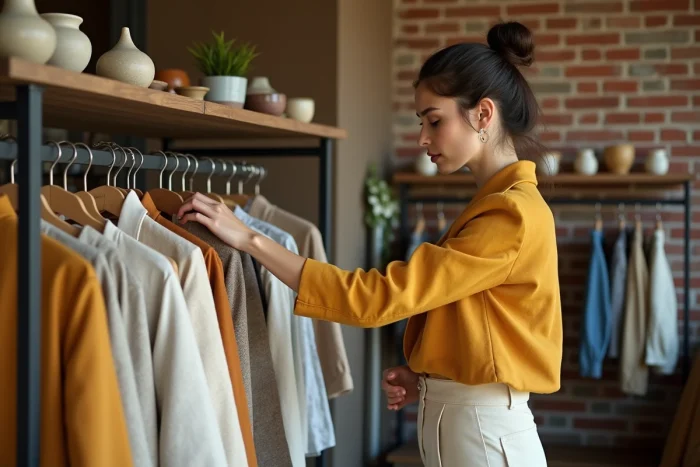
The market for original finds is no longer limited to scouring flea markets on Sunday mornings. Purchasing channels have fragmented, sales formats have evolved, and discovery filters on platforms are restructuring how a unique piece reaches the buyer. We have observed a clear shift over the past two years: rarity is now created upstream, not on the shelf.
Drop culture and pre-order: shopping for unique pieces before production
The drop logic, long reserved for streetwear brands, is now influencing independent creators. The principle is simple: a mini-collection announced via newsletter or on a Discord server, a pre-order window of a few days, and then production only launches what has been reserved.
This model eliminates dormant stock and guarantees the customer an ultra-limited series piece. For the creator, it’s a market test without financial risk. For the buyer, it’s the assurance of not encountering the same object at their neighbor’s.
We recommend subscribing directly to the private channels of brands rather than monitoring their public social media. Drop announcements often pass through closed mailing lists, and pieces sell out before even appearing on Instagram. While exploring shopping on Les Humeurs de Gloupsy Chérie, several creators can be spotted who operate exclusively on this short series principle.
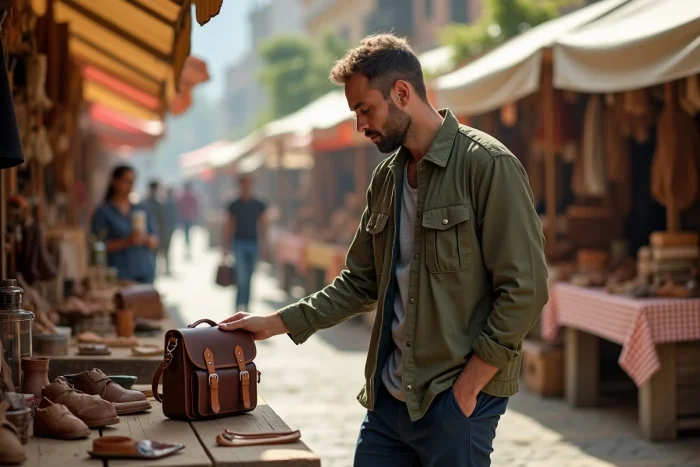
Eco-friendly filters on marketplaces: online thrifting with precision
Etsy, Vinted, and Vestiaire Collective have deployed sustainable search filters between 2024 and 2025: recycled material, local production, artisanal manufacturing. This is not a marketing gimmick. These filters profoundly alter the discovery mechanics.
On a catalog of several million references, an “artisanal” filter reduces background noise and brings forth pieces that would otherwise be hard to find. The difference with a classic keyword search is significant: the filter cross-references metadata declared by the seller (type of material, place of manufacture, certification), whereas a keyword only captures the title of the listing.
Filtering criteria to combine for vintage and artisanal finds
- Local production + recycled material: this combination highlights workshops that work from textile scraps or recovered metals, often absent from the first pages of results
- Customization possible: listings that mention a production time and a custom option indicate a creator who produces on demand, not a reseller
- Detailed workshop listing: a seller who documents their process (workshop photos, tools, steps) offers traceability that mass resellers cannot imitate
These filters transform the act of online thrifting. We move from passive scrolling to targeted searching, with a significantly higher relevance rate.
Live shopping on TikTok and Instagram: the rising channel for rare objects
Live shopping is not a passing trend. TikTok Live and Instagram Live have become direct sales channels where micro-creators present small artisanal series in real-time. The format works because it recreates the tension of an auction: limited stock, immediate decision, direct interaction with the maker.
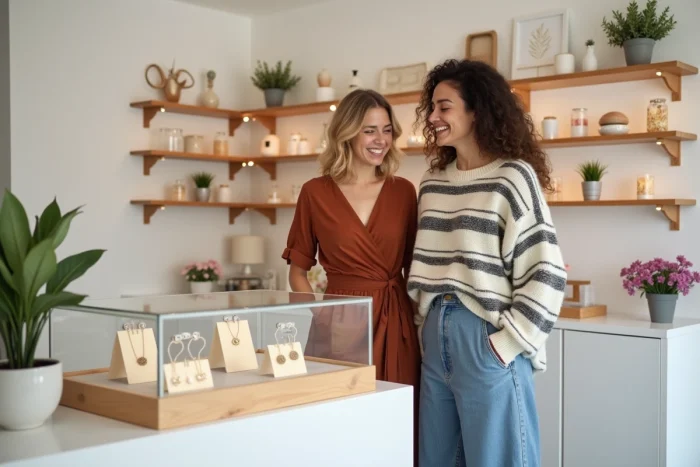
What distinguishes this channel from a simple online catalog is the live demonstration. A ceramist shows the texture of a glaze, a leatherworker flips a bag to expose the inner seams. The buyer sees the product handled before purchasing, something no static product listing can replace.
The rise of micro-creators on these platforms creates a short digital circuit. No intermediaries, no distributor margins, and often lower prices than those found on traditional marketplaces for an equivalent level of finish.
Spotting live sessions worth attending
Not all live sessions are created equal. We observe that the most interesting sessions share three characteristics:
- The creator announces the exact number of pieces available at the beginning of the session, allowing for an assessment of actual rarity
- They answer technical questions live (composition, care, dimensions), a sign that they master their production
- The frequency of the lives is regular (weekly or bi-weekly), indicating stable activity and not a one-off promotional stunt
Local creator marketplaces in France: DreamAct, WeDressFair, and beyond
French platforms like DreamAct, WeDressFair, or Un Grand Marché have structured themselves around a precise positioning: direct connection between buyer and artisan, with a workshop listing that documents the manufacturing process. This level of transparency exceeds what large generalist marketplaces offer.
The shopping experience on these platforms often includes a customization option. You don’t just choose a finished product: you participate in its design by selecting a color, engraving, or dimension. This shift towards co-creation alters the relationship to the product. The purchased object carries intention, not just a price.

For those looking for original gifts or objects that cannot be found in traditional stores, these platforms are a top choice. Their catalog remains deliberately limited, making discovery easier without the saturation effect of e-commerce giants.
Shopping for original finds today relies on a combination of channels: closed circuit pre-orders, smart filters on marketplaces, creator lives, and specialized platforms. The unique piece is no longer found by chance; it is tracked methodically.