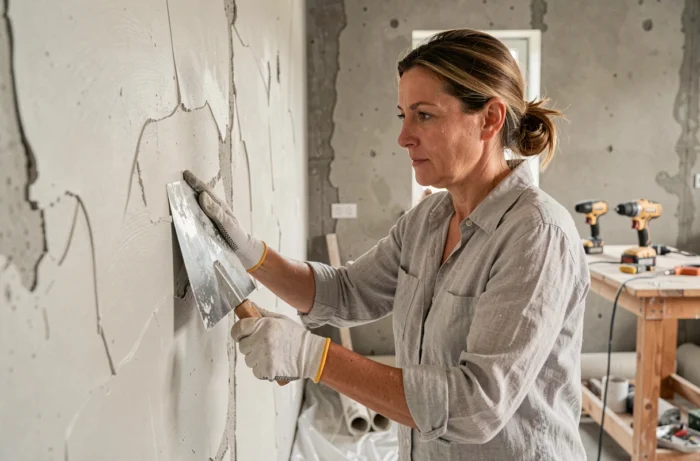
A crack in a load-bearing wall, a heating bill that rises every winter, a kitchen that hasn’t changed in thirty years: the reasons to renovate a house are rarely abstract. They stem from a specific discomfort. Renovation work allows you to address these issues, provided you set the right priorities before touching the first wall.
DPE Coefficient 2027: a parameter to consider before renovating
Before launching an insulation or heating replacement project, a regulatory change deserves your attention. The conversion coefficient for electricity used to calculate the DPE will change from 1.9 to 1.7 on January 1, 2027. In practice, a home heated by electricity could receive a better energy label without any additional work.
Diagnostics carried out until December 31, 2026, will remain valid but can be updated online for free, without a new visit. If you are planning an energy renovation to improve your DPE ranking, wait for the coefficient update before sizing your work. A home rated E could move to D with this recalculation alone, which alters the budget to be allocated.
This point is often overlooked in the planning of a renovation project. Renovating too early or over-insulating a home that is already close to the threshold amounts to investing in work with marginal returns. To explore the work on Renov Et Plus, it is useful to first know your current label and its likely trajectory.

Home Renovation: Distinguishing Structural from Cosmetic
Have you ever noticed that some projects drag on for months while others are completed in two weeks? The difference rarely lies in the size of the house. It lies in the nature of the work undertaken.
Structural Work: What Affects the Building
Structural work concerns the solidity and safety of the home. Framework, roofing, load-bearing walls, foundations, outdated electrical systems, plumbing to be redone: these items cannot be postponed. An ignored structural defect worsens every other intervention. Redoing a beautiful kitchen in a house with an electrical panel that does not meet standards is like building on sand.
The logical order follows a simple rule: work from the top down and from the inside out. The roof first (to protect the site), then insulation, ventilation, and finally the networks (plumbing, electricity).
Finishing Work: What Changes Daily Life
Painting, flooring, kitchen or bathroom layout, installation of new equipment: these interventions come afterward. They are quicker, often doable room by room, and do not always require a professional. The temptation to start here is strong because the result is immediately visible. But finishes never compensate for a structural defect.
Renovation Budget: The Items We Systematically Underestimate
The cost of materials and labor constitutes the visible part of the budget. Three other items inflate the bill unexpectedly.
- Induced work: opening a wall to run new electrical cables often requires replastering, repainting, and sometimes replacing the floor around the intervention area. This extra cost does not appear in any initial quote if the preliminary diagnosis is incomplete.
- Compliance: a partial renovation project can trigger a requirement for compliance. Replacing an electrical panel sometimes necessitates redoing the entire circuit. Changing a boiler may require a flue that meets current standards.
- Coordination between trades: a plumber waiting for the electrician, a drywall installer blocked by the heating technician. Every day of delay on a site has a cost, even when no one explicitly charges for the lost time.
Allowing a safety margin in the initial budget protects the end of the project. The last items (finishes, kitchen equipment) are those that are sacrificed when the budget is exceeded.

Insulation and Ventilation: The Duo That Cannot Be Separated
Why this coupling? Because a well-insulated house that is poorly ventilated becomes a humidity trap. Air laden with water vapor (showers, cooking, breathing) no longer escapes naturally when the walls are airtight. The result: condensation, mold, material degradation.
Every insulation project must include a ventilation component. A simple single-flow VMC is sufficient in most renovated homes. A double-flow VMC, which is more expensive, recovers heat from the outgoing air to preheat the incoming air. The choice depends on the local climate and the level of insulation aimed for.
Internal insulation remains the most common method in renovation because it does not alter the exterior appearance of the home. External insulation offers better thermal performance but costs more and may sometimes require a prior declaration of work or a building permit if the facade is modified.
Energy Renovation: Check for Aids Before Signing a Quote
Several public aid programs exist to finance part of the energy renovation work. Their amounts and conditions change regularly. Before signing a quote, two checks are essential.
First, the chosen professional must be RGE certified (Recognized Guarantor of the Environment). Without this certification, most aids are inaccessible, regardless of the type of work. Then, aid applications must be submitted before the start of the project. Starting work and then requesting retroactive funding almost always results in a refusal.
The France Rénov’ network offers free support to identify the available aids based on your housing, income, and the nature of the project. This preliminary diagnosis allows for adjusting the renovation plan to the actual budget available.
One last point often forgotten: the renovation of an existing home does not fall under RE2020, which applies to new constructions. Confusing the two regulatory frameworks leads to inappropriate requirements and unnecessary additional costs on a renovation project.