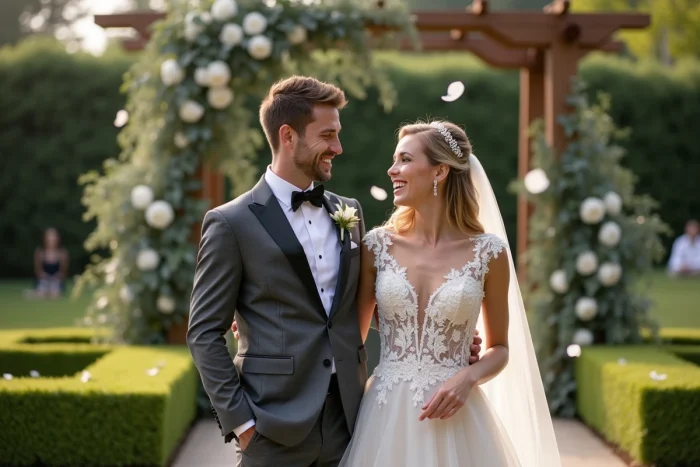
Organizing an unforgettable wedding involves thinking beyond decoration and the menu. The success of a wedding celebration is also measured by how each guest, regardless of age or sensitivity, experiences the day. This article compares the organizational aspects that weigh most on the actual experience of the guests, distinguishing between what pertains to pure aesthetics and what touches on concrete comfort.
Guest Comfort versus Venue Aesthetics: Where the Success of a Wedding Really Lies
Most wedding planning guides rank expense items by cost (venue, caterer, photographer, decoration). This budget hierarchy does not reflect the actual impact of each item on guests’ feelings.
| Organizational Aspect | Aesthetic Impact | Impact on Guest Comfort |
|---|---|---|
| Reception Venue | High (setting, photos) | High (accessibility, temperature, acoustics) |
| Floral Decoration and Scenography | High | Low to none |
| Table Plan and Flow | Medium | High (reduced mobility, children, elderly) |
| Dedicated Quiet Space | Low | High (sensitive guests, neurodivergent individuals, young children) |
| Sound System and Music Volume | Low | High (auditory fatigue, sensory discomfort) |
| Caterer Choices and Food Options | Medium (presentation) | High (allergies, diets, seniors) |
The gap between these two columns shows that items with a high impact on comfort are often under-budgeted. A couple that allocates a significant portion of their budget to floral scenography without planning for a quiet retreat area makes a choice that penalizes some of their guests.
To delve deeper into each item and find more information on Party Wedding, the practical sheets on the site detail providers by category and region.
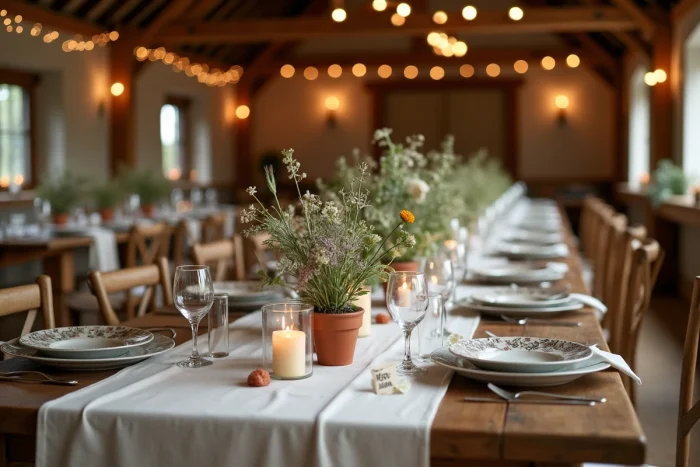
Sensory Accessibility and Welcoming Sensitive Guests at a Wedding
The accessibility of a wedding is not limited to wheelchair ramps. It encompasses managing noise, light, crowds, and break times, all of which affect elderly guests, young children, and neurodivergent individuals.
Creating a Calm Sensory Space
Planning a room or sheltered corner, away from the dance floor and sound system, allows guests who need it to retreat without leaving the party. This type of calm sensory space is increasingly recommended in recent planning guides.
In practical terms, it requires just an adjoining room equipped with a few comfortable seats, soft lighting, and clear signage. A well-marked quiet space reduces early departures of guests who would otherwise leave the evening due to sensory overload.
Adjusting Sound Volume by Zones
The sound system is rarely considered in terms of zones. A DJ who raises the volume on the dance floor also saturates the dining area if the two zones are not physically separated. When choosing the reception venue, checking the acoustic configuration (partitions, separate rooms, outdoor spaces) avoids this issue.
Elderly guests struggle with prolonged high volume. Individuals who are hypersensitive to noise (a common profile among neurodivergent adults) may disengage as early as the cocktail hour if the background music is already loud.
Table Plan and Flow: An Underestimated Lever for Organizing a Successful Celebration
The table plan is often approached from a diplomatic angle (who to place next to whom). Its logistical role is less discussed, even though it conditions the fluidity of movement throughout the evening.
- Ensure there are wide enough aisles between tables so that a person in a wheelchair or a parent with a stroller can move without asking others to stand up.
- Place guests with reduced mobility and elderly individuals near exits, restrooms, and the quiet space to limit travel.
- Avoid large round tables that force guests to speak loudly to be heard by someone sitting across, which increases the overall noise level.
A table plan designed for flow benefits all guests, not just those with specific needs. The fluidity reduces queues at the buffet, speeds up service, and decreases fatigue at the end of the evening.
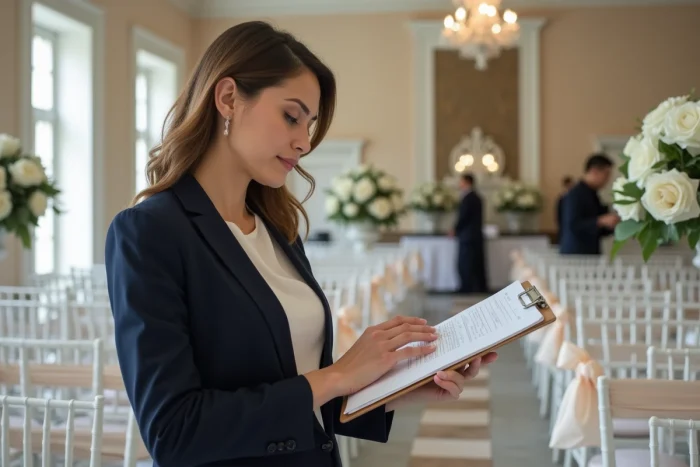
Participatory Entertainment and the Rhythm of the Wedding Celebration
The entertainment of an original wedding increasingly relies on the active participation of guests. Collective DIY workshops (creating a guest book on-site, customizing a souvenir item) are gradually replacing passive entertainment like slideshows or quizzes about the couple.
This type of setup offers a concrete advantage for inclusivity: hands-on and calm activities are suitable for guests who do not dance, whether they are elderly, children, or introverted guests. It provides an alternative to the dance floor without isolating those who participate.
Timing Highlights Without Exhausting Guests
A wedding that strings together the ceremony, cocktail hour, meal, entertainment, and dance party without any real breaks exhausts some guests by the middle of the evening. Incorporating free time slots (half an hour between dessert and the opening dance, for example) allows guests to catch their breath.
- Alternate a collective highlight (speeches, first dance) with an informal moment where everyone can move freely.
- Assign specific tasks to witnesses and close friends to keep coordination fluid without relying solely on the couple.
- Provide a tentative schedule communicated to guests, especially those traveling with children or who have transportation constraints.
Sharing tasks with the entourage transforms the organization into a moment of connection, instead of concentrating the entire burden on the couple. Witnesses who manage the logistics of an activity or coordinate a children’s space free the couple to enjoy their evening.
A successful wedding is not one where every aesthetic detail was perfect. It is one where the grandmother stayed until dessert, where the autistic friend didn’t need to leave at 10 PM, and where the children found something to occupy themselves without their parents spending the evening watching over them. Comfort trade-offs, often free or low-cost, weigh more on the collective memory than the choice between peonies and hydrangeas.